
Mental Health & Wellbeing
"Our school is a place where we all come together as one community to learn, have fun and make lasting friendships all under God's love and care."
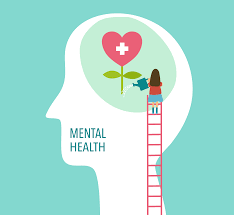
At St Lawrence Catholic Primary School, we are committed to supporting the emotional health and wellbeing of our pupils and staff. We know that everyone experiences life challenges that can make us vulnerable, and at times someone may need additional emotional support. We take the view that positive mental health is everybody’s business and that we all have a role to play. We encourage all our children to talk openly about any concerns and ask for help when they need it. All our members of staff are trained to recognise and effectively deal with any concerns or worries that our children may face.
At St Lawrence Catholic Primary School we:
- help children to understand their emotions and feelings
- help children feel comfortable sharing any concerns or worries
- help children socially to form and maintain relationships
- promote self-esteem and ensure children know that they count
- encourage children to be confident
- help children to develop emotional resilience and to manage setbacks
We have specially trained staff who can support your child in small groups using tailored games and activities. These run throughout the school day and are available to all our children.
We employ the services of a school counsellor from the Catholic Children's Society. Should you feel your child would benefit from this service, referrals can be made by our SENDCO, Mrs Gough.
We are very excited to announce that we are a Rainbows school. This means that some of our staff have been specially trained to deliver support groups for children who have experienced a significant loss in their lives. This may be due to the death of a loved one, or family breakdown / separation. The programme helps children cope with their grief and feel less alone.
We also have specially trained members of staff called ELSA's (Emotional Literacy Support Assistants). Our staff are trained to work with our children dealing with social skills, emotions, bereavement, social stories and therapeutic stories, anger management, self-esteem, counselling skills such as solution focus and friendship.
Zones of Regulation
What are the zones of regulation?
Zones of Regulation is an approach used to support the development of self-regulation in children. All the different ways children feel and the states of alertness they experience are categorized into four coloured zones. Children who are well regulated are able to be in the appropriate zone at the appropriate time.
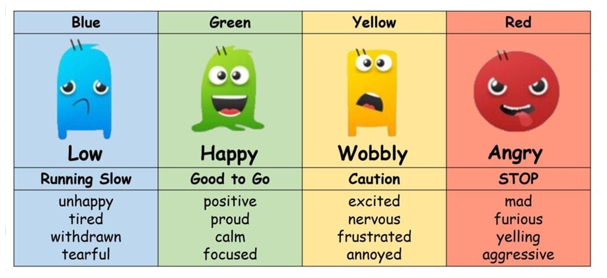
Teaching the zones gives children a shared language to talk about their emotions by associating them with highly visual coloured zones. The approach is based on research and is highly respected as a systematic, cognitive behavioural technique leading children to greater independent regulation. It helps to teach children to identify their feelings, their levels of alertness, to understand how their behaviour influences those around them and gives them the tools they can use to manage their feelings.
How do the Zones of Regulation help children?
It provides a vocabulary to talk about emotions.
It helps children recognise their own emotions.
It helps children to detect the emotions of others.
It helps them recognise what might trigger certain emotions.
It helps them see how others may interpret their behaviour.
Gives them tools for problem-solving.
Why are we introducing this?
It gives the children and adults the right words – a common language – to talk about emotions in a way that is non-judgemental
It is simple for everyone to understand.
It teaches healthy coping and self-regulation strategies.
A person who can self – regulate is able to:
Remain calm in a stressful situation.
Cheer themselves up after a disappointment.
Know when they are experiencing an emotional overload and adjust.
The Zones
Important things to remember:
There is no ‘bad’ zone.
Everyone experiences all of the zones at different times and different circumstances.
We can’t change the way children feel but we can help them manage their feelings/states and behaviours and validate their feelings, ‘I can see you are angry and I understand, but it is not okay to …’
You can be in more than one zone at a time
If a child is confident using words to describe their emotions, they might not always need to relate this to a zone. However, making links to the zones will help them choose the right strategy to manage their feelings.
If a child is in the red zone, you must limit the verbal – this is not a teachable moment! Instead, discuss the use of tools when the child is calm and well regulated and plan for if/when it happens again.
Tools and strategies
Nursery and Reception children have been taught the coloured zones. They will have four coloured teddy bears in their classroom to reinforce the zones and to use as appropriate.
Children in year 1 to 6 have been taught the coloured zones and have discussed strategies to help regulate their emotions. Some useful strategies include:
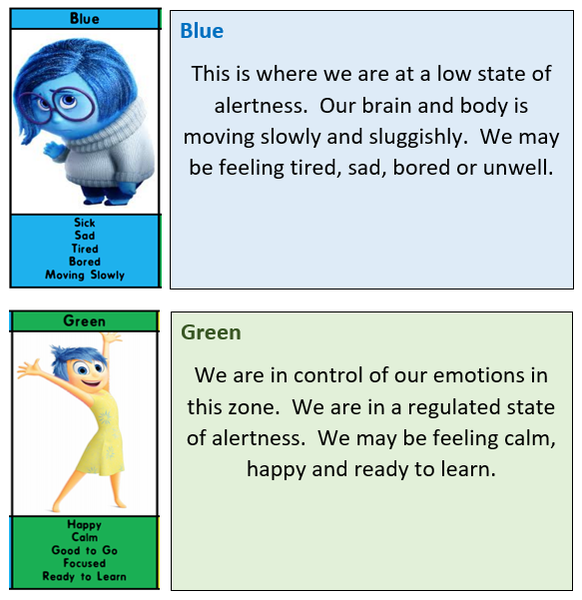
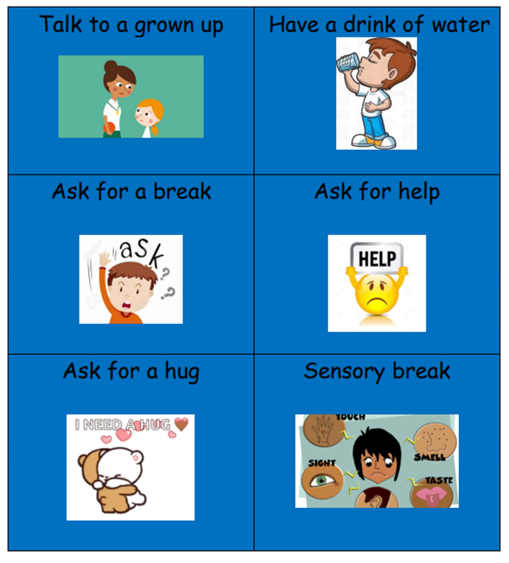
Blue zone: This is where we need to help our bodies wake up, feel better and regain focus. What can I do if I am in the blue zone?
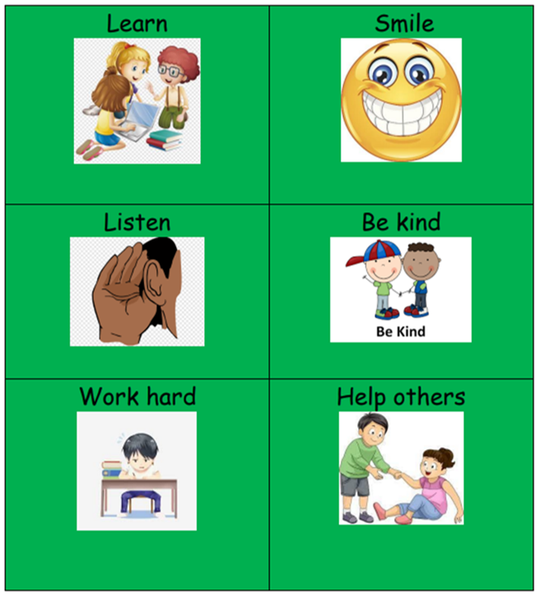
Green zone: This is where we are feeling calm, focussed, happy and ready to learn. We are well regulated and proactive. What can I do if I am in the green zone?
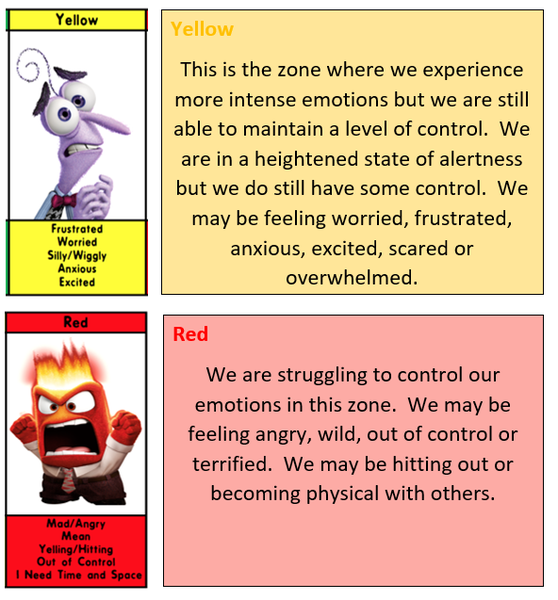
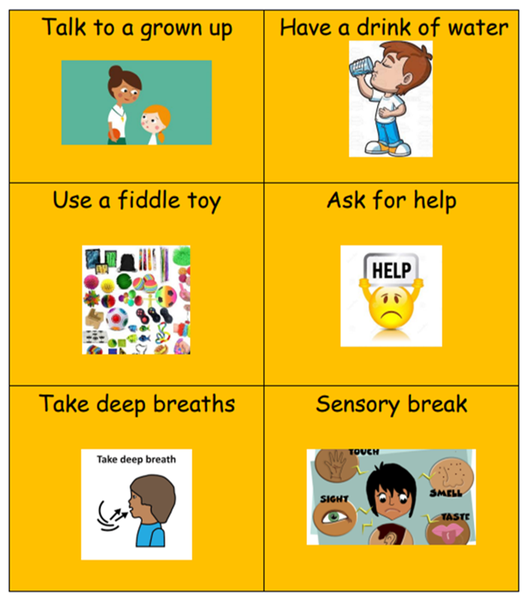
Yellow zone: This is where our feelings are heightened but we are still in some control. We need help to calm ourselves. What can I do if I am in the yellow zone?
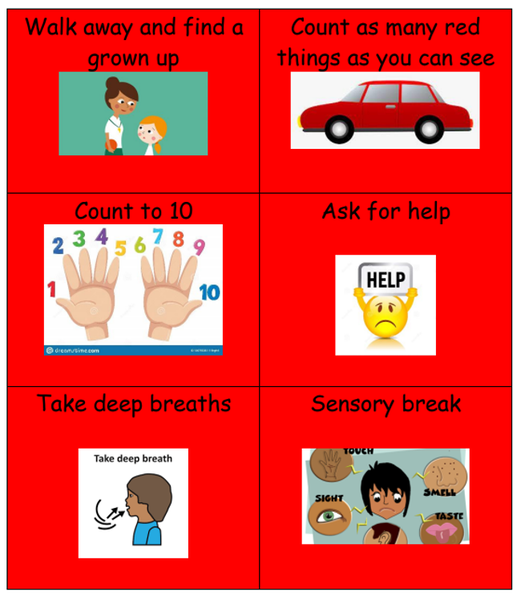
Red zone: This is where we are feeling completely overwhelmed. We need help to stay safe and calm down. What can I do if I am in the red zone?
Sensory breaks: Some sensory strategies include: squeezing play dough or scrunching up paper into a ball / Use of a fidget toy / Blowing bubbles / Listening to calming music / Using a trampoline / Rolling on an exercise ball / Drawing / Reading / Counting / Deep breathing.
Rainbows
Rainbows Bereavement Support GB is a well respected national charity having a proven, positive impact on the lives of children, young people and adults grieving a significant and often devastating loss in their lives.
Their vision is, quite simply, for every child and young person in every school in Great Britain, grieving a significant and often devastating loss in their lives, to be understood and supported appropriately.
The principal objectives and activities of Rainbows Bereavement Support:
- Raising awareness of the impact of bereavement and loss on children, young people and adults
- Facilitating high quality education and training in bereavement and loss
- Providing practical, realistic and sensitive guidance to ensure all schools have appropriate bereavement policies and procedures in place
- Nurturing and developing the emotional health and mental well-being of children, young people and adults who have experienced a significant loss through death, relationship breakdown or other adverse circumstance