Teaching, Learning & Curriculum
Leaders are determined that all pupils achieve well and access a wide range of opportunities. Leaders have developed a curriculum which helps pupils to learn knowledge in a logical order. Their intention is for pupils to leave school with the knowledge and skills to ‘be successful in an ever-changing world...pupils achieve well in all subjects, as the curriculum is taught effectively without distraction.
OFSTED 2022
Curriculum Intent, Implementation and Impact Statement – At St Lawrence Primary School, we have designed an ambitious curriculum, where children can thrive and develop from our dedicated approach to growing children holistically, nurturing their unique skills and talent to provide our children with the best educational start in life. Our curriculum considers the needs of a 21st Century child and is ambitious in providing our children with the knowledge, skills and learning behaviours required to become successful life-long learners.
Background – The National Curriculum is a set of subjects and standards used by primary schools, so children learn the same things. It covers what subjects are taught and the standards children should reach in each subject. Schools have the autonomy to decide on how this content is delivered, and what approach we would take to ensure that our curriculum is bespoke to the needs of our children and community. Our curriculum celebrates diversity and utilises the skills, knowledge and cultural wealth of the community whilst supporting the pupils’ spiritual, moral and cultural development.
Curriculum Intent – At the heart of our school are a set of core values: KIND – K-Knowledge and Understanding of the world; I-Inquisitive and imaginative minds; N-Nurturing and compassionate hearts; D-Devoted to living as God’s children. These underpin our curriculum and the ethos of the school. At St Lawrence, we place great importance on a curriculum which develops the whole child. Through our core values, we foster an environment where the emotional, physical, academic, social, moral, spiritual and cultural development of each child is considered.
The uniqueness of every child is recognised and valued. As such, our curriculum embraces the Catholic community from which it exists, recognising and celebrating the diverse cultures and experiences from which our children originate. We constantly adapt our learning journey to meet the needs and interests of our children, offering an excellent education underpinned by a broad, culturally rich and powerful curriculum to ensure that all pupils are well-equipped for the next stages in their education.
Our curriculum is underpinned by the teaching of basic skills, knowledge, concepts and values. However, creativity is pivotal at St Lawrence Primary School. We constantly provide enhanced opportunities to engage in learning and to celebrate and develop the individual talents of our pupils, recognising everyone as unique with their own ambitions, skills and dreams. We aim to provide an environment that encourages lifelong learning.
Community involvement is also an essential part of our curriculum as we celebrate local traditions, learning new skills to enable children to take an active role in various events throughout the year. Children leave St Lawrence Primary School with a sense of belonging to a tightly-knit community where they have the confidence and skills to make decisions, self-evaluate, make connections and become lifelong learners.
Curriculum Implementation – Implementation describes the way in which we deliver our intent consistently each day. To do this, we have carefully designed our bespoke values-based curriculum. This is designed to enable learners to acquire relevant subject knowledge which underpins the application of skills. Skills are carefully and progressively mapped across each key stage and subject area. Knowledge is consolidated and built upon to support retention and recall. This ensures that by the time children leave our school they have learnt, and are able to recall and apply the key information that we feel is important in order for them to be successful in the future. Skills and knowledge are taught discreetly in subject areas so that our children gain a broad understanding of each subject and know exactly which subject they are studying. However, the curriculum is designed to embed transferable skills throughout, without weakening essential skills-based learning. The quality of our classroom environments serves to stimulate and engage higher order thinking.
How do we plan for Cultural Capital? The government have placed great emphasis on schools developing Cultural Capital. Cultural Capital is the essential knowledge that children need to prepare them for their future success. It is about giving children the best possible start to their early education.
At St Lawrence, we see Cultural Capital as the accumulation of knowledge, attitudes, habits, language and possessions that enables individuals to demonstrate their cultural competence and social status. Our school plays a crucial role in developing this through immersing children in dance and music.
Embedding Cultural Capital into our curriculum is a way of closing the gap between children from differing socio-economic backgrounds by ensuring that children from all backgrounds have the same opportunities in society to achieve their full potential.
Enhanced Curriculum: Our enhanced curriculum aims to run alongside and compliments the National Curriculum, but aims to broaden the horizons of our children and links to our school's value. The opportunities offered aim to provide our children with unique experiences outside the National Curriculum. We broaden horizons by developing global learners, which underpin all of our values, by planning for opportunities to be aware of the wider world and its current issues and to understand and respect cultural diversity and differences with an understanding of how the world works and encourage participation in the community at a range of levels, from the local to the global. We teach our children to make the world a more sustainable place and to take responsibility for their actions. We do this by providing learning linked to:
- International/Cultural understanding
- Respect for others and our differences
- Community participation (local and global)
- Sustainability and environmental issues
- Challenging stereotypes
Curriculum Impact: We plan our lessons with clear learning objectives. We base these upon the teacher’s detailed knowledge of each child, striving to ensure that all tasks set are appropriate to each child’s level of ability. Our lesson plans make clear the expected outcomes for each lesson. We know those individual children who do not achieve the expected level for the lesson, and we use this information when planning for the next lesson. Progress is assessed regularly. Each term, assessment data is gathered and progress is checked by the Deputy Head teacher. Children are expected to make good or better progress in all subjects and this progress is tracked. In cases where children are identified as not making ‘expected progress’ in English or Maths, interventions are put in place to address gaps in learning. Pupils leave St Lawrence Primary School with a secure understanding of the academic content; with the understanding of how to be socially, morally, spiritually and culturally responsible and aware; how to make positive contributions to the local community and how to endeavour to be the best that they can be. We aim for all of our children to leave St Lawrence respectful, skilful, ambitious and with a thirst for life and all it has to offer.
At St Lawrence Catholic Primary School, we aim to deliver a broad and balanced curriculum. Here you will find an overview of the curriculum approach for each year group taught at school. Click the relevant class below to find more information about your child’s learning.
Art & Design

ART is as natural as sunshine and as VITAL as nourishment. Mary Ann F Kohl.
Art and Design stimulates creativity and imagination and is an important area of children’s learning. It provides visual, tactile and sensory experiences and a special way of understanding and responding to the world. It is expected that during their time at St Lawrence Catholic Primary School, our pupils are given opportunities to explore and evaluate artists and communicate what they see, feel and think through the use of colour, texture, form, pattern and different materials and processes.
The National Curriculum for Art and Design aims to ensure that all pupils:
- Produce creative work, exploring their ideas and recording their experiences
- Become proficient in drawing, painting, sculpture and other art, craft and design techniques
- Evaluate and analyse creative works using the language of art, craft and design
- Know about great artists, craft makers and designers, and understand the historical and cultural development of their art forms.

Pupils at our school value the role Art and Design plays in their lives and consequently achieve well in their own artistic endeavours. It is taught every half-term on a weekly basis. Our pupils enjoy taking part in various competitions and have their very own Arts week in the summer. We turn our school hall into an Art Gallery and allow parents & adults to enjoy our pupils’ work.
Pupils also enjoy taking part in various competitions throughout the school year. We have participated in the Mayor’s Fourth Plinth competition, The Global Canvass Endangered species competition, Steve McQueen Tate Y3 project, SSA Paint a poppy challenge and Feltham Pond competition organised by the London Borough of Hounslow. In addition to this, we like to link in with our local community and partake in events that enrich the cultural and local knowledge of our children, as advocated by core British Values. To do this, we work closely with local and national agencies.
By the end of Key Stage 2, our children are able to:
- Record from experience, imagination and first-hand observations, developing and realising their ideas with confidence.
- Select and record visual and other information in a sketchbook.
- Experiment with, control and select ideas, media and visual elements for different purposes.
- Identify ways to develop and improve their work.
- Evaluate their own and others' work, using an appropriate vocabulary, showing an understanding of how and why the work was made.
Computing

We need technology in every classroom and in every student and teachers' hand, because it is the pen and paper of our time, and it is the lens through which we experience much of our world. David Warlick.
The children at St Lawrence are living in a world where technology has completely developed and transformed every aspect of society over the past few decades. In an increasingly digital world, there now exists a wealth of software, tools and technologies that can be used to communicate, collaborate, express ideas, create digital content and live in an ever-changing technological world. At St Lawrence Catholic Primary school, we recognise that pupils are entitled to a computing education which prepares them for living and working in an ever changing digital society. Our teaching of Computing equips pupils to use computational thinking and creativity to understand and revolutionise the world. Whilst computing has deep links with mathematics, science, design and technology, it is an integral part of all other curriculum subjects, including and not limited to history, geography, phonics and reading.
The computing curriculum is divided into three main areas:
- Computer Science – How computers and computer systems work and how they are designed and programmed
- Information Technology – The purposeful use of existing programs to develop products and solutions
- Digital Literacy – the skills, knowledge and understanding needed in order to participate fully in an increasingly digital world

This allows the children to build a broad and balanced knowledge through which they gain experience in two equally important ways. First is through the teaching of discrete computing skills, where children have access to computers in focused computing lessons whereby they will learn how to investigate and program devices, use technology to communicate, use the Internet safely and effectively, handle data, store and, sort and retrieve information. Secondly, children are provided with the opportunities to use computing in a cross-curricular manner to aid and assist with tasks. This includes support through technology enabling those who would otherwise find a given task difficult. They are encouraged to think about, use and apply the skills they have learnt in the other subject areas.
Children at St Lawrence Catholic Primary School have access to a range of resources to enable successful learning and exploration of computing. Within the school, there is a desktop computer, an interactive whiteboard and an iPad in each classroom. Early Years Foundation Stage and Key Stage 1 have access to an audible story device in every classroom and a bank of iPads. In the upper key stages, children have a bank of chromebooks.
Computer is not a device any more. It is an extension of your mind and your gateway to other people. Mark Shuttleworth
Design Technology
Good design is a renaissance attitude that combines technology, cognitive science, human need and beauty to produce something that the world didn't know it was missing. Paola Antonelli
Design Technology is an inspiring, rigorous and practical subject. Using creativity and imagination, pupils design and make products that solve real and relevant problems within a variety of contexts, considering their own and others’ needs, wants and values. Our children acquire a broad range of subject knowledge and draw on disciplines such as mathematics, science, engineering, computing and art. They learn how to take risks, becoming resourceful, innovative, enterprising and capable citizens. Through the evaluation of past and present design and technology, they develop a critical understanding of its impact on daily life and the wider world. High-quality design and technology education makes an essential contribution to the creativity, culture, wealth and well-being of the nation.
The National Curriculum for Design Technology aims to ensure that all pupils:
- Develop the creative, technical and practical expertise needed to perform everyday tasks confidently and to participate successfully in an increasingly technological world
- Build and apply a repertoire of knowledge, understanding and skills in order to design and make high-quality prototypes and products for a wide range of users
- Critique, evaluate and test their ideas and products and the work of others
- Understand and apply the principles of nutrition and learn how to cook
Pupils at our school value the role design technology plays in their lives and consequently achieve well in their own design endeavours. We have acquired the Kapow scheme of work in which we teach standalone Art and Design & Technology.
It is intended that the work of Key Stage 2 will build on and develop the skills learnt in Key Stage 1. Children will be taught the skills and knowledge needed to successfully design and make and evaluate their work.
- Design: to carry out research on existing products. To develop design criteria in order to produce a product which is fit for purpose and aimed at a specific group of people.
- Make: to select and use a range of tools and materials, taking into account their product’s functional and aesthetic qualities.
- Evaluate: to evaluate existing products, their own work and the work of others in order to improve their design. To have an understanding of how designers and their products have helped to shape the world.
- Technical Knowledge: to apply their understanding of how to strengthen, stiffen and reinforce more complex structures, understand and use mechanical systems in their products, understand and use electrical systems in their products and apply their understanding of computing to programme, monitor and control their products.
- Cooking and nutrition: to have an understanding of the seasonal nature of foods, and where and how they are produced. To understand what it means to have a healthy diet. To cook and prepare a range of predominantly savoury foods using a range of techniques.
EAL
 One language sets you in a corridor for life. Two languages open every door along the way. Frank Smith
At St Lawrence Catholic Primary School we are proud to welcome families from a wealth of different cultures and backgrounds, and we greatly value the rich diversity of our school community. Over 43 languages are spoken in our school. Therefore, English as an Additional Language (EAL) is integral to the success of our teaching and learning.
Children who are identified as needing extra help to access the National Curriculum are supported in many different ways. We plan and deliver learning opportunities appropriate to the needs of the children using a range of educational resources and materials. Our children are encouraged to play as full a part as possible in class from the very start of their school journey.
Some of the ways our children with EAL are supported in our school:
- 1:1 Guided speaking, reading and writing lessons with the class teacher or support staff
- A small group guided speaking, reading and writing lessons with the class teacher or support staff
- A pair or small group work with strong English speakers
- Circle games practising vocabulary / structures
- Small group games practising vocabulary / structures
- Picture / vocabulary matching games
- Picture and sentence matching
- Available computer programmes to support key vocabulary
- Picture cards to support key vocabulary
- Supported role play
English

The journey of a lifetime starts with the turning of a page. Rachel Anders
At St Lawrence Catholic Primary School, we recognise the crucial importance of studying the English language. Improved performance in reading, writing and spoken language will enable our pupils to express their thoughts and ideas more fluently, accurately and, ultimately, to their greater satisfaction. Literacy is at the core of all other curriculum subjects, while enriching their lives beyond school. We make use of high-quality texts to inspire our children to read and write, picking texts that are both challenging for the children, engaging and offer good role models for their work.
If a child can’t say it, a child can’t write it! Ros Wilson
Phonics – We use Monster Phonics for the planning and delivery of phonics in EYFS, KS1 and as the basis for phonics interventions in KS2. As children move through the early stages of acquiring phonics, they practise by reading texts which are fully decodable from our banded reading scheme. We have access to Monster Phonics eBooks, which link directly to our Phonics scheme and are supplemented by books from Reading Planet – Rocket Phonics and Big Cat Phonics for Letters and Sounds. As the children progress through the banded reading scheme, they can experience a variety of reading genres and both fiction and nonfiction texts. Children are provided with a banded reading book that matches their reading level all the way through to KS2. Children can also select books independently of our school library.
“The more that you read, the more things you will know. The more you learn, the more places you’ll go.” Dr. Seuss
Reading – Our main objective is to foster a love of reading. Every classroom has a bright and engaging book corner. At the centre of the school is our newly refurbished library and learning resource centre. Children from Reception to Year 6 can borrow books of their choice and access the resources. Children are encouraged to choose books from the classroom, library or home to share with their parents and encourage a love of reading. We have recently invested in new reading books for children to use throughout the school. We also have organised visits to the local library where children can explore new books and further develop their love of reading.
Guided Reading – Our children will read with their class teacher or support staff in small groups. The pupils take turns reading aloud to develop their fluency skills and are asked questions to develop their comprehension skills. They have at least one Guided Reading session each week from Years 1-6 but will also begin Guided Reading during Reception when they are ready. In KS2, we have whole class guided reading sessions in addition to small group reading sessions. Whole class sessions focus on developing children’s reading skills using the ‘VIPERS’ approach.
We celebrate Book Week every year through different activities. These include author visits, book tasting, quizzes and dressing up.
“Be yourself. Above all, let who you are, what you are, what you believe, shine through every sentence you write, every piece you finish.” John Jakes

Writing – It is important that our children are able to write with confidence, stamina, with accuracy for a purpose and for pleasure. They are taught to use a range of forms for a variety of purposes and audiences. Quality whole texts are the starting point for all English writing units. We use Talk4Writing approaches to structure many of our teaching units.
- Pupils will have the knowledge and skills to plan, draft and write across a range of genres to suit an intended audience and purpose.
- They will have secure grammar, spelling and phonic knowledge and apply this to their written work.
- They will have legible handwriting: transcribing quickly and fluently.
- They will be able to evaluate their own and others' written work and make changes through effective editing.
- Pupils will be effectively challenged: a challenging pitch and open-ended tasks cater for the needs of the more able pupils.
- They will enjoy writing for pleasure.
Handwriting – We are very proud of our children’s handwriting. Children are taught to write in the cursive style from Year 2 and, at the end of Key Stage 2, all pupils have the ability to produce fluent, legible handwriting.
Spellings – The foundations in spelling are taught in the EYFS, firstly as part of phonics teaching (through segmenting to spell) and taught as part of Monster Phonics. All children within EYFS and KS1 access a daily phonics lesson. The ‘tricky word’ spellings are taught alongside the corresponding phonic phases. The children in Years 1 and 2 also learn the common exception word lists for their year groups. As children move towards the end of KS1 the focus changes from phonics to the learning of spelling rules and strategies. Within Year 2, children are also beginning to learn words from the national curriculum appendix. Within KS2, key spelling strategies and rules are taught within the classroom. We use the ‘Superhero Spelling’ Scheme from Monster Phonics to teach spelling lessons. Children will receive their weekly spelling homework to complete at home. Alongside learning to spell rules and strategies, Years 3/4 and Years 5/6
" We lose ourselves in books. We find ourselves there too." Anonymous
Geography

The study of geography is about more than just memorising places on a map. It's about understanding the complexity of our world, appreciating the diversity of cultures that exists across continents. And in the end, it's about using all that knowledge to help bridge divides and bring people together. Barack Obama
Geography is an important part of a child’s education and we encourage our children to be young explorers. We want to help enhance their thinking and learning skills, to gain a coherent knowledge and understanding of their locality, environment and the wider world. As young explorers, our aim is to inspire their curiosity and provide them with the tools to question events and study physical and social features in the world they live in.
The national curriculum for geography aims to ensure that all pupils:
- Develop contextual knowledge of the location of globally significant places – both terrestrial and marine – including their defining physical and human characteristics and how these provide a geographical context for understanding the actions of processes
- Understand the processes that give rise to key physical and human geographical features of the world, how these are interdependent and how they bring about spatial variation and change over time.
They are competent in the geographical skills needed to:
- Collect, analyse and communicate with a range of data gathered through experience of fieldwork that deepens their understanding of geographical processes
- Interpret a range of sources of geographical information, including maps, diagrams, globes, aerial photographs and Geographical Information Systems (GIS)
- Communicate geographical information in a variety of ways, including through maps, numerical and quantitative skills and writing at length.

We aim to develop geographical knowledge by providing a wide variety of experiences through visits, fieldwork and to develop educational knowledge through geographic-specific teaching. When teaching Geography, we initially focus on the local area and compare it with other locations both within and outside the United Kingdom, developing knowledge and skills through the years in school. Children experience map work, developing their skills within school and through extended fieldwork. Children are given every opportunity to develop and build on their geographical skills through their primary years. Cross-curricular links are made to maths with grid referencing and graphs, science with recycling and art with the story of the water project.
By the end of Key Stage 2, our children are able to:
- Use maps, atlases, globes and digital/computer mapping to locate countries and describe features
- Use the eight points of a compass, four and six-figure grid references, symbols and key (including the use of Ordnance Survey maps) to build their knowledge of the United Kingdom and the wider world
- Use fieldwork to observe, measure, record and present the human and physical features in the local area using a range of methods, including sketch maps, plans and graphs, and digital technologies.
 Geography Highlights.
We have been fortunate enough to be involved in ‘The Story of Water. This is an arts-based learning programme which aims to inspire teaching through creativity while meeting key National Curriculum objectives in Geography. Some of our children were involved in a workshop organised by the joint efforts of our Geography and Art & DT subject leaders. Children were motivated, curious and, above all enjoyed their chance to be creative in their Geography lessons. Children were provided with tasks that encouraged them to listen, explore and investigate their new-found questions derived from the skills of being individual thinkers. Children in Year 4 were also introduced to Layers of London. This is a map-based History & Geography website developed by the Institute of Historical Research. Users can access free historic maps of London and contribute stories, memories and histories to create a social history resource about their area. This provided another cross-curricular link to Geography. It proved to be very useful when the children made educational visits to our local library and Hanworth Park House to learn about local landmarks, landscapes and major changes that have occurred over time.
In KS2, children are given the opportunity to use their mapping skills to plan their school trips. In the past, we have planned visits to a couple of landmarks; The Steam Museum, Brentford, where children took part in a water cycle workshop and Tate Britain, London.
History

The more you know about the past the better prepared you are for the future. Theodore Roosevelt
At St Lawrence Catholic Primary School our children learn not just about other people and places but they learn from them. It helps them to navigate their daily lives and teaches them to ask questions when they encounter people or places they don't initially understand. Through history, our children learn how past societies, systems, ideologies, governments, cultures and technologies were built, how they operated, and how they have changed. All this knowledge makes our children more rounded people who are better prepared to learn and make connections between the past, present and future.

Within our school, we support and encourage our children to make connections between the topics taught and how this can influence their lives and the world around them. Each topic is taught to ensure the children explore and research an area of a historical period in depth. We believe this will enthuse and inspire the pupils to be inquisitive, independent learners.
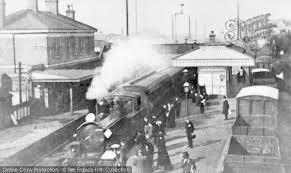
As part of our historical enquiries, the children at St. Lawrence Catholic Primary School have the opportunity to study our local area and the changes that have occurred. There are opportunities for children to explore how history and time have changed the area they live and learn in. They are encouraged to understand that not all historical changes are for the better and evaluate why these events occur.
Many of our history topics have cross-curricular elements that allow the children an opportunity to see how history infiltrates so many areas of our lives and learning. These cross-curricular opportunities enrich the history curriculum and allow more time to explore and learn about how relevant our past is. We work to meet the requirements of the National Curriculum and ensure that pupils have experience of historical study of British History and other Ancient civilisations.
We are fortunate to be able to offer themed days and extracurricular activities to embed the children’s learning in and out of a classroom setting. These experiences are made possible by the support of our parents and the community, and this encourages the children to continue their learning at home. Our aim is to enable children to build on key skills needed in history by putting no boundaries in their learning and to prepare them for their historical experiences in secondary education and as they move on into their adult life.
Italian Language
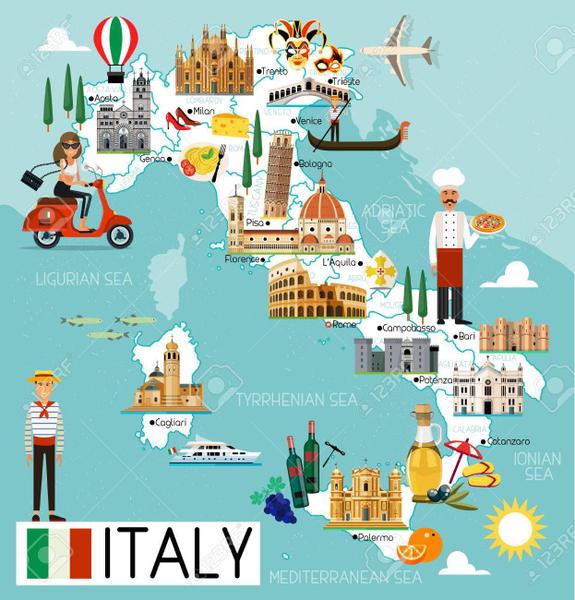
A different language is a different vision of life. Federico Fellini
At St Lawrence Catholic Primary School our children are lucky to be taught by our wonderful native Italian-speaking teacher, Miss Rosella. The children participate in weekly Italian lessons where they are given the opportunity to develop their skills in reading, writing and speaking Italian – key skills when learning a modern foreign language.
The acquisition of a modern foreign language opens the door to the wider world in which we live. It gives children a better understanding of the multicultural society we are all so lucky to be a part of and helps them to develop their communication and literacy skills, which ultimately lay the foundation for future language learning.
In addition to this, the learning of a modern foreign language (in our case, Italian) provides a medium for cross-curricular links and for the reinforcement of the knowledge, skills and understanding developed in other languages.
Maths
Mathematics has beauty and romance. It’s not a boring place to be, the mathematical world. It’s an extraordinary place; it’s worth spending time there. Marcus du Sautoy - British mathematician
The 2014 National Curriculum for Maths aims to ensure that all children become fluent in the fundamentals of Mathematics, are able to reason mathematically and can solve problems by applying their mathematics.
At St Lawrence Catholic Primary School, these skills are embedded within Maths lessons and developed consistently over time. Our learners will develop a deep and secure knowledge of mathematics at each stage of their learning so that at the end of each year they will have acquired the mastery of mathematical facts and concepts they have been taught before moving on to more challenging materials. Differentiation is achieved by emphasising deep knowledge and through individual support and intervention.
Children develop a concrete, pictorial and abstract understanding of the curriculum and use a range of manipulatives to support their understanding of mathematical concepts. These skills are then applied across the curriculum through other subjects such as Science, Geography and Art. Key number facts and timetables are taught robustly to support fluency. Children are taught to reason and problem solve and deepen their knowledge and understanding.

Children in the Early Years explore mathematical concepts through play and are given the opportunity to develop these skills through both guided and child-initiated tasks. Children develop an understanding of numbers, shapes and measures through developing their understanding of key mathematical vocabulary and exploring concepts through everyday play both indoors and outdoors. We want children to recognise the importance of maths in the wider world and that they are also able to use their mathematical skills and knowledge confidently in their lives within a range of different contexts. We want all children to enjoy Mathematics with the ability to reason mathematically.
Multiplications Check: The National Curriculum expectation is that by the end of Year 4, children are able to recall all 12 tables up to 12x12. In the summer term, children in Year 4 will complete a multiplication table check.
- Learning times tables is really important. Here are just some of the ways in which learning tables can benefit your child.
- By starting with smaller tables and building up, children will learn number rules which will make learning other tables much easier
- Memorising times tables makes it far quicker and easier for children to work out maths problems in their heads.
- Beyond memorising times tables, learning and understanding how they work can do wonders for building children’s knowledge of important mathematical concepts. These include fractions, percentages and even shape.
- Knowing their times tables isn’t just useful for weekly multiplication tests – they also come in handy outside of the classroom! How much would it cost to buy three comics which cost £2 each? Simply calculate 3 x 2!
Our Maths Policy and Calculation Policy can be found on our website under Policies and Procedures.
"Without Mathematics there is nothing you can do. Everything around you is mathematics. Everything around you is numbers. Shakuntala Devi
Music
Music gives a soul to the universe, wings to the mind, flight to the imagination and life to everything. Plato
Music is not only a National Curriculum Primary subject, but it is an integral part of life at St Lawrence Catholic Primary School. From class worship to class assemblies, from hymn practice to school concerts – music is everywhere! Music opens pathways for all pupils from Nursery to Year 6: to gain self-confidence, grow their creativity and develop a sense of achievement.
At St Lawrence, we enable pupils to perform, listen to, review and evaluate music – both the works of composers and musicians and the works of themselves and their peers. Pupils are also enabled to learn to sing and to play musical instruments both on their own and with others through improvisation and composing. Our teaching of Music encourages pupils to not only gain a lifelong love of, and interest in Music, but to support cross-curricular learning in other National Curriculum subjects too, in particular Mathematics (e.g. number rhymes) and Literacy (e.g. days of the week song).
From Year 1 to Year 6, we teach weekly music lessons using the ‘Charanga’ scheme, which is informed by the national and model music curriculum. Charanga is a highly interactive and modern online resource which supports the National Curriculum aims for Music and enables excellent teaching. The scheme allows pupils to engage in games which teach pupils to understand and explore music through the inter-related dimensions: pitch, duration, dynamics, tempo, timbre, texture, structure and appropriate musical notations.
Each unit of work, for each year group, gives pupils access to a wide range of music across a range of historical periods, genres, styles and traditions. The scheme encourages pupils to express themselves through their voices and movements and through playing both tuned (e.g. glockenspiels) and untuned (e.g. maracas, tambourine) instruments.
Children in our Early Years phase follow the Early Years Foundation Stage Curriculum. In Expressive Arts and Design, the development of children’s artistic and cultural awareness supports their imagination and creativity. In nursery, 3 and 4 year olds will learn to: listen with increased attention to sounds, respond to what they have heard, express their thoughts and feelings, create their own songs or improvise and play instruments. Children in reception will be learning to: listen attentively, move to and talk about music, express their feelings and responses, watch and talk about dance and performance art, expressing their feelings and responses, sing in a group or on their own and explore and engage in music making and dance.
In KS2, pupils in Years 3 and 5 have the amazing opportunity to learn Ukulele and Recorder through the Hounslow Music Service, in which they have weekly lessons.
Alongside our Music curriculum, pupils have plentiful extracurricular opportunities for music too. In addition to the weekly music lessons, KS2 pupils (years 4–6) are offered the opportunity to learn guitar in a small group setting. There is also an after-school choir club and a morning musical theatre club for all KS2 pupils. They have various opportunities to perform for their peers and families throughout the year.
PE

Be the best version of yourself: for yourself, your team mates and everyone you're representing. Kate Richardson Walsh
At St Lawrence Catholic Primary School, we encourage our children to be healthy and active every day. All our children take part in high-quality PE and games lessons, having opportunities to learn fundamental skills and movements in a wide variety of sports. These include gymnastics, football, netball, dance, athletics, tag rugby and many other competitive and non-competitive sports. Life skills are developed to include co-operation, competition, good sportsmanship, self-discipline and a desire to keep fit and healthy for future well-being. We provide some opportunities for children to take part in extracurricular sporting activities such as football, basketball, netball, and rugby. We take part in interschool competitions instilling values of endurance, commitment and teamwork. During the course of their time at St Lawrence Catholic Primary School, our children will have the opportunity to compete in many of the organised competitive events within the Borough, competing in netball, basketball, girls’ and boys’ football matches, cross-country, athletics and tri-golf tournaments.
The national curriculum for physical education aims to ensure that all pupils:
- develop competence to excel in a broad range of physical activities
- are physically active for sustained periods of time
- engage in competitive sports and activities
- lead healthy, active lives
All pupils ought to be physically active every day, be it through PE lessons, daily activities or extra- curricular activities. PE supports them to develop healthy lifestyles. All pupils should have the opportunity to compete in sport and other activities that build character and help to embed values such as teamwork, fairness and respect.
What is Physical Development in the Early Years Foundation Stage? Physical Development is one of the Prime Areas of Learning and covers skills such as gross motor development and fine motor skills as well as helping children to think about ways to keep healthy and safe. It aims to encourage healthy habits in young children through exercise, sport, dance and play, as well as promoting interaction with people and things around them. Physical activity ideas include posting activities, threading, and playdough activities to help develop fine motor skills. Playground games and outdoor activities target the development of gross motor skills.
EYFS Physical Development Objectives
Moving and handling
- Skills enabling children to show good control and coordination in large and small movements.
- Children are able to handle equipment and tools effectively, including pencils for writing.
Health and self-care
- Children know the importance of good health, which includes physical exercise and a healthy diet.
- Children are able to manage their own basic hygiene and personal needs successfully, including dressing and going to the toilet independently.
Gross Motor Skills
- Negotiate space and obstacles safely, with consideration for themselves and others.
- Demonstrate strength, balance and coordination when playing.
- Move energetically, such as running, jumping, dancing, hopping, skipping and climbing.
Fine Motor Skills
- Hold a pencil effectively in preparation for fluent writing – using the tripod grip in almost all cases.
- Use a range of small tools, including scissors, paintbrushes and cutlery.
- Begin to show accuracy and care when drawing.
Key stage 1
Pupils develop fundamental movement skills, become increasingly competent and confident and access a broad range of opportunities to extend their agility, balance and coordination, individually and with others. They should be able to engage in competitive (both against self and against others) and co-operative physical activities, in a range of increasingly challenging situations. Pupils should be taught to: master basic movements including running, jumping, throwing and catching, as well as developing balance, agility and coordination, and begin to apply these in a range of activities; participate in team games, developing simple tactics for attacking and defending perform dances using simple movement patterns.
Key stage 2
Pupils continue to apply and develop a broader range of skills, learning how to use them in different ways and to link them to make actions and sequences of movement. They should enjoy communicating, collaborating and competing with each other. They should develop an understanding of how to improve in different physical activities and sports and learn how to evaluate and recognise their own success. Pupils should be taught to:use running, jumping, throwing and catching in isolation and in combination, play competitive games, modify where appropriate [for example, badminton, basketball, cricket, football, hockey, netball, rounders and tennis], and apply basic principles suitable for attacking and defending develop flexibility, strength, technique, control and balance [for example, through athletics and gymnastics] perform dances using a range of movement patterns take part in outdoor and adventurous activity challenges both individually and within a team compare their performances with previous ones and demonstrate improvement to achieve their personal best.
 We are proud of all our children for their commitment to physical education, being awarded the Platinum (2024) and Gold Schools Games Mark for the last 5 years. This award highlights the whole school’s achievements across a variety of sports.
At St Lawrence Catholic Primary School, we want our pupils to get the best experience from their P.E lessons and to be active at playtime. The invited sports council children help make decisions alongside the teachers to maintain a positive attitude towards physical activity. The children appointed will meet with Mrs Frampton to discuss how to get the very best out of our P.E lessons. They are a motivated team, and we are confident that they will help to make lessons as fun and enjoyable as they possibly can be!
Alongside Mrs Frampton & Mr Dye, pupils will be involved in:
- Helping to organise Inter-School competitions
- Helping to ensure our achievements are shared with the rest of the school
- Being a representative for the rest of the school to put ideas and opinions forward
- Attending leadership meetings to develop their skills and share ideas
- Pupils will have their own sports councillor badge to wear proudly around school
- They will help to organise and run both Sports Days and School Games Days
Pupils will be helped every step of the way with their role and new sports councillors will be appointed each academic year. This is a fantastic opportunity for the pupils of St Lawrence to further their leadership skills and have input in their sporting development throughout the school.
Swimming at St Lawrence Catholic School – Children in year 5 attend weekly swimming lessons. When the children reach Year 6, we ask our parents to complete a swimming survey. The outcome can be viewed below.
 |
Can your child swim 25m using any stroke? | Can your child swim 25m using a range of strokes? | Can your child perform safe self rescue? |
|
2025-2026 No. Of Children: 58 No. Of Responses: 51 |
Yes 82% No 18% |
Yes 70% No 30% |
Yes 80% No 20% |
|
2024-2025 No. Of Children: 62 No. Of Responses: 34 |
Yes 84% No 16% |
Yes 75% No 25% |
Yes 72% No 28% |
|
2024-2025 No. Of Children: 60 No. Of Responses: 56 |
Yes 52% No 48% |
Yes 38% No 62% |
Yes 36% No 64% |
PSHE
 There is nothing in a caterpillar that tells you it's going to be a butterfly. Buckminster Fuller
PSHE has a very high profile in the life of our school and is at the forefront of whole school initiatives. Our children learn via effective strategies to promote inclusion and all pupils engage fully in activities to promote their personal and social development. At St Lawrence Catholic Primary School we teach our pupils to stay safe and healthy, build self-esteem, resilience and empathy whilst our effective PSHE programme tackles barriers to learning, raises aspirations, and improves the life chances of all of our children in our school.
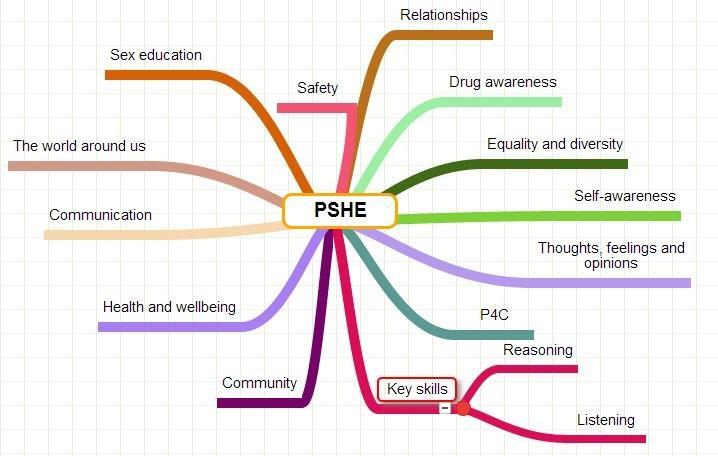
Through our PSHE curriculum, pupils develop the knowledge, skills and attributes they need to keep themselves healthy and safe, and prepare for life and work in modern Britain. Our curriculum supports pupils managing many of the critical opportunities, challenges and responsibilities they will face as they grow up and later in adulthood in an ever-changing, challenging world. By working with partner schools, parents, carers, external agencies and our parish, we can reinforce the very high standard of PSHE education in our community.
Religious Education
St Lawrence Catholic Primary School sees Religious Education as the Core and Foundation of the entire educational process. Because of this, each child is valued for what he/she is rather than for what he/she can do and every child is given equal opportunity for development to the highest potential. Through Religious Education we communicate the beliefs and values which should inspire and unify every aspect of school life and the Curriculum. This gives St Lawrence its distinctive nature as a Catholic School.
Children who become part of St Lawrence School are enabled to be in touch with God, to know his Church and to know the meaning of Discipleship. We believe that Religious Education is not a subject among many but the foundation of the entire education process. In addition to studying the Life and Teachings of Jesus, the children study a variety of World Faiths. This enables our children to understand more about the larger community outside home and school. We show the similarities rather than the differences. We have a duty to foster these similarities because God made all men and women to dwell on earth in harmony.
The Dr Margaret Carswell Framework Model, which is taught in a three year cycle and which links to the liturgical year, is used to deliver the RE curriculum. The content of this Model offers a systematic programme of study which comprehensively covers all the strands and requirements of the Curriculum Directory. Each topic plan sets out the areas taught from Revelation, Church, Celebration and Life in Christ ensuring progression and depth of provision.
Please click the link to learn more about Catholic Life at St Lawrence Catholic Primary School:
Science
The future belongs to the curious. The ones who are not afraid to try it, explore it, poke at it, question it and turn it inside out. Anonymous
At St Lawrence Catholic Primary School, the intent of our science curriculum is to ensure all children leave the school with a secure foundation of scientific knowledge and practical skills. This understanding will help to ensure all children have the ability to be successful in any potential future learning and enjoyment in the scientific field. We want our children to be determined, enthusiastic and motivated about science learning. We nurture the natural curiosity of our children during science lessons, enabling them to become independent in thought and actions and encouraging them to develop self-motivation and a life-long love of science learning.
We believe that science stimulates and excites children's curiosity about phenomena and events in the world around them. It also satisfies their curiosity with knowledge. This is because science links direct practical experience with ideas, and it can engage learners at many levels. We believe that science will lead to a better understanding of ourselves and the world. It provides opportunities to appreciate scientific facts and concepts and to experience scientific discovery. Science is a crucial subject to expand curious minds. St Lawrence Catholic Primary School is a member of the Association for Science Education. Our primary science curriculum provides a useful starting point for teachers in planning and developing science lessons.
To ensure high standards of teaching and learning in Science, we implement a curriculum that is progressive throughout the whole school. We plan to ensure full coverage of, ‘The National Curriculum programmes of study for Science 2014’ and, ‘Understanding of the World’ in the Early Years Foundation Stage.
We ensure that all children are provided with rich learning experiences that aim to:
- Prepare our children for life in an increasingly scientific and technological world today and in the future.
- Help our children acquire a growing understanding of the nature, processes and methods of scientific ideas.
- Help develop and extend our children’s scientific concept of their world.
- Build on our children’s natural curiosity and develop a scientific approach to problems.
- Encouraging open-mindedness, self-assessment, perseverance and developing the skills of investigations including: observing, measuring, predicting, hypothesising, experimenting, communicating, interpreting, explaining and evaluating.
- Develop the use of scientific language, recording and techniques.
- Develop the use of computing in investigating and recording.
- Make links between science and other subjects.
Our Science Curriculum is high quality, well-thought-out and is planned to demonstrate progression. The successful approach to the teaching of Science at St Lawrence Catholic Primary School results in a fun, engaging, high-quality science education that provides children with the foundations for understanding the world. Teaching staff use a wide range of formative assessment tools during lessons to judge the impact that the teaching of science is having on the children's learning.

The Primary Science Quality Mark (PSQM) is an award scheme to celebrate the quality of science teaching and learning in primary schools. St Lawrence Catholic Primary School is very excited to be working towards the PSQM (Primary Science Quality Mark). Through staff and pupil questionnaires, our starting points have been established and a range of activities and strategies are being implemented to ensure that learners remain enthused and inspired by science as well as challenged and resilient.
 National Physical Laboratory 2025 - Our Science Ambassadors had an amazing day out at the National Physical Laboratory (NPL) in Teddington for their big anniversary celebration! We had to leave school super early because the fun kicked off at 9am. When we arrived, we jumped straight into four awesome activities. First up was the water rocket challenge – we launched rockets powered by water and whoosh... two of ours flew into trees! (We blamed the wind or maybe our aiming skills!) Then we watched the coolest liquid nitrogen show – we saw a balloon shrink like a raisin and then magically puff back up. It was like science wizardry! After that, we tested our brains in a science-themed escape room, hunting for clues and cracking codes like proper scientists. We didn’t escape in record time, but we gave it a good go! Finally, we played some science games – one challenge was to stack LEGO people into a tower (not as easy as it sounds!). If we managed four without a tumble, we got to keep one – hooray! Wind, rain, and rocket-eating trees couldn’t stop us from having a fantastic, science-filled day.
 Science Day and Science Fair 2025 – Science Day, held on Tuesday, 1st April, at St. Lawrence Catholic School, was a fantastic celebration of curiosity and creativity. We began the day with a whole-school assembly, led by our Science Ambassadors, who proudly introduced this year’s theme, “Change and Adapt.” Children from all year groups took part in exciting online workshops, engaging in hands-on learning experiences.
The excitement continued on Wednesday, 2nd April, with the Year 5 Science Fair, where both Year 5 classes, Chestnut and Cedar, proudly showcased their experiments and projects to friends, classmates, and families. It was a day filled with learning, discovery, and teamwork, highlighting the importance of enquiry and a passion for science in our school community.
 Celebrating Science Week at St Lawrence – A round of applause for the incredible students at St. Lawrence who have shown outstanding enthusiasm and curiosity during Science Week 2025! Exploring the theme of Time, our budding scientists have embarked on a journey of discovery through a wide range of captivating investigations. From experimenting with cornflour slime to creating vibrant rainbows and lava lamps, every activity has been an opportunity to unlock the mysteries of science. We've witnessed the joy and excitement as the children tested waterproof boats, built towering spaghetti and marshmallow structures, and looked into the secrets of ink in pens. Their confidence in describing their findings reflects their deep engagement and understanding of the scientific process. Congratulations to all the students for their curiosity, creativity, and dedication to exploring the wonders of science. Let's continue to nurture this spirit of enquiry and discovery throughout the year! Well done, children of St. Lawrence! Keep shining brightly as the future scientists and innovators of tomorrow!
 Science Week at St Pauls Catholic College – On Thursday 9th March 2023, some of the year 5 students went on a trip to St. Paul’s Catholic College to experience the joys of Science Week. It was a truly amazing event. We did a variety of different science experiments, including heat, light, sound and many more. For example, for the heat experiment, we used a battery and put it on some metal strings. As a result, we saw small sparks appear on the metal strings. Another experiment we did was an experiment with sound. In this experiment, we listened to the difference in sound when changed by an amplifier. Lastly, we did an experiment with magnets where we put 3 magnets into tubes of different materials (plastic, metal and metal with copper wire twisted around them). We observed that the magnet went through the plastic tube the quickest, as there was no magnetic force pulling on it. All in all, it was an amazing afternoon and everyone enjoyed it. Thank you Ms Lapinska and Mrs Sullivan for arranging it for us. By Maria.